Remember a time several years ago when nobody, I mean no body, was trying to visit El Salvador? But in the past few years, it’s like clouds of the heavens parted and out came Central America’s El Salvador, full of promise. Their chefs were just as interested in the trends and philosophies that influenced our kitchens. At El Xolo Maiz in San Salvador, they bring farm to table concepts, rustic but considered plating, intriguing flavor combinations, sashimi-quality fish, mixology. I was happy to be hosted to experience it!
Young foodies have definitely discovered the lower-lit, dark wood dining room and bar with open kitchen. They offer several vegetarian and vegan opions. Salvadoran psychobilly music played in the background, for real.
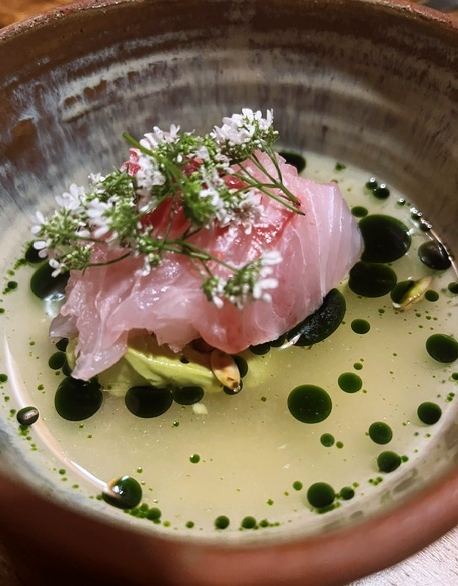
Though I normally don’t order cooked mahi mahi, I had a hunch about mahi mahi as crudo and I was right! Crudo de Pepitoria, using crudo of the day, had avocado, what I believe were chamomile buds, soy and citrus with some pumpkins seeds, plated in a handmade clay pinch pot. The fish was bright, clean and so mild.
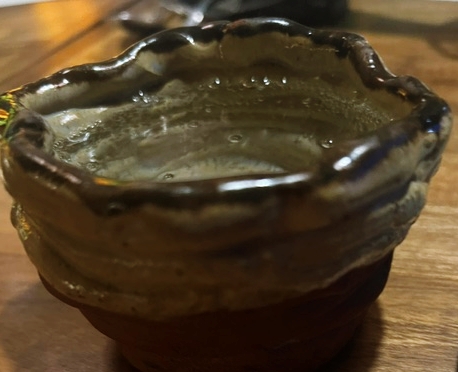
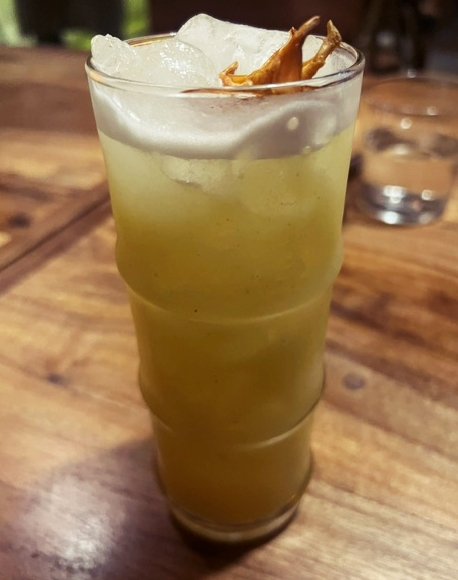
Xolo is another fine-dining restaurant in El Salvador that puts serious thought into its mocktails. I feel like I’m gonna have to do some insisting back in the USA! People might forego booze at the moment for many different reasons, but everyone likes fun. Xolo carries alcohol-free rum, gin and whiskey that I swear, you wouldn’t know. You wouldn’t! I honestly had trouble deciding from the several choices, but ultimately settled on the Pacifico: booze-free rum, pineapple, seasonal fruit, citrus. It was sweet and refreshing, giving that real tiki bar taste. Sparkling water keeps things from being treacly.
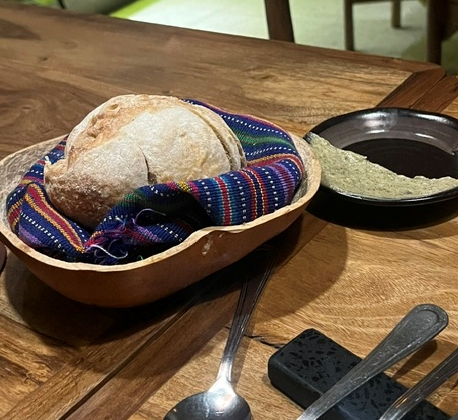
Even the bread course was cheffy: served hot with compound herb butter and a touch of chili. Lots of flavors!
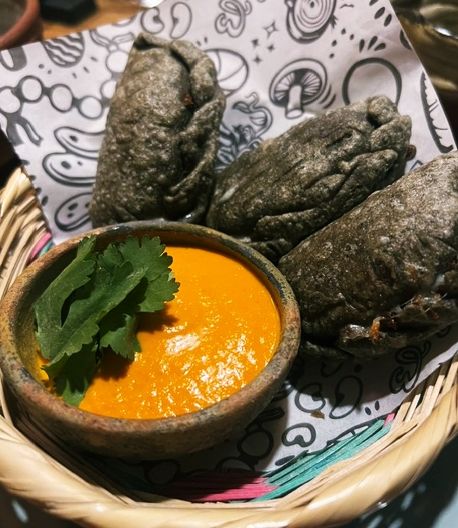
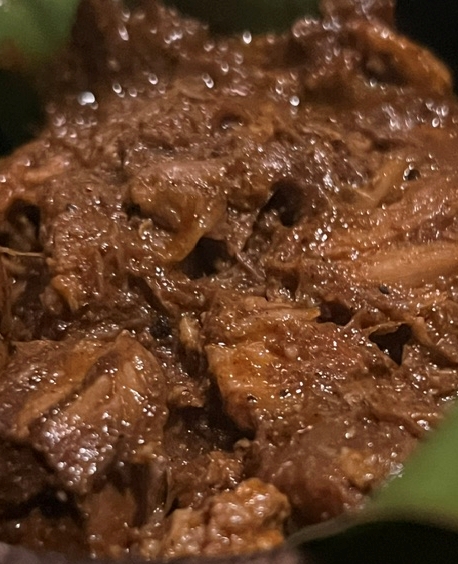
Tartar de Res Madurada was served with purple enchiladas with a very tender texture, dry aged beef tartare, chorizo hollandaise sauce, loroco. Loroco is a bud-like plant that is very similar to fiddlehead ferns: vegetal. Familiar but new flavor profiles. I noticed an herb/ground spice that may have been dried and ground tomato.
Seaweed is fresh, not pickled like in Japanese cuisine.
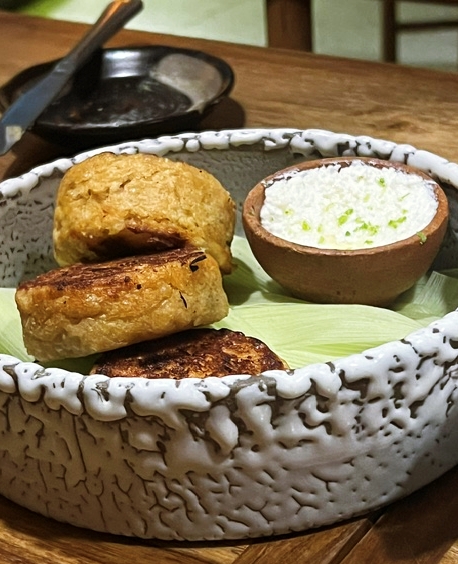
Corn cakes with crema were naturally sweet. Crema is a Central American condiment made from heavy cream, sour cream and cream cheese. Each country has their own recipes and proportions. Naturally, they generally prefer the El Salvadoran mix, but also have certain favorite brands that I didn’t take down. Is crema from H Mart one of my secret cooking ingredients? You have to get an invite to find out!
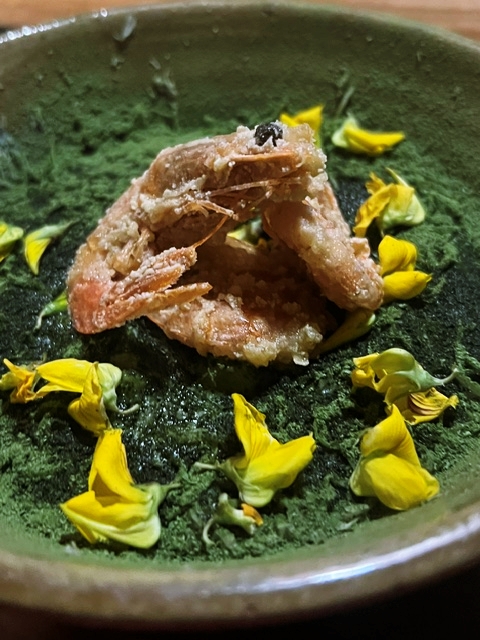
Shrimp are “camarones” in El Salvador, but more usually “gambas” in Spain. Remember that many tribes are still intact on different sides of mountains, rivers and other natural boundaries have kept dialects intact, same as remote areas of the US like Appalachian and Smith Island. Risotto de Camaron had chipilin, which a super nutritious leafy legume, even more nutritious than spinach with a spinach/matcha taste, along with their massive prawn/shrimp. We just don’t have shrimp like this back home. They’re like the size of the sunny fish that’s the first fish I ever caught over in Deep Creek Lake. The risotto was crispy and appealing.